
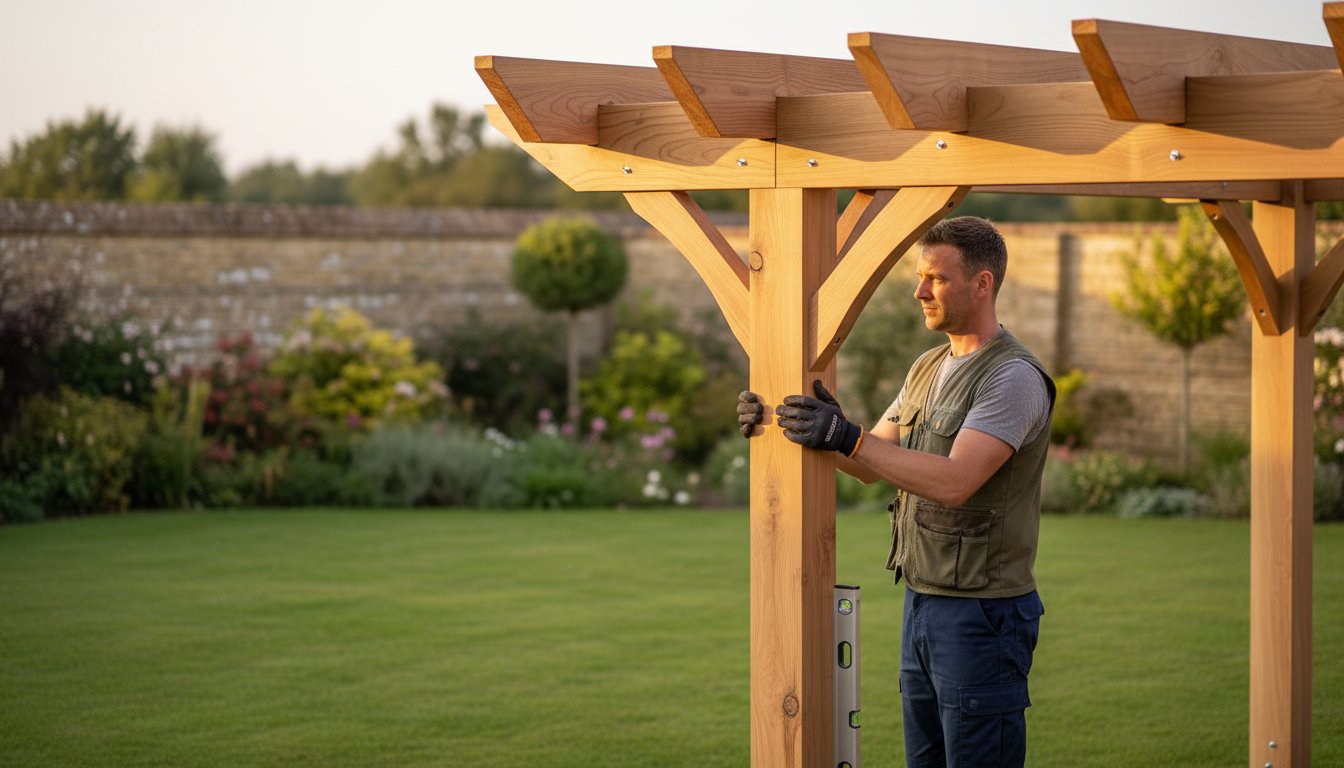
Most garden structures across Essex fail within five years because the wrong grade of wood was selected at the point of purchase. It’s a common sight for our team at Essex Board and Timber; high-quality work ruined by premature rot or severe warping caused by the unpredictable British damp-dry cycle. You shouldn’t have to guess what timber for outdoor use uk weather requires to ensure your project remains structurally sound for decades. We’ve seen hundreds of Braintree tradespeople and homeowners lose money on materials that simply weren’t fit for purpose.
You’re likely frustrated by the sight of splitting boards or the constant threat of wet rot after just a single winter. At Essex Board and Timber, we promise to clarify technical specifications so your next external project lasts at least 15 years. This guide previews the best timber species for our local climate, explains which stainless steel fixings prevent unsightly staining, and demonstrates why sourcing from a local, independent merchant provides better value than national chains. Whether you’re building a deck or a heavy-duty pergola, we’ll give you the facts you need to build it once and build it right.
Key Takeaways
- Learn how to select timber that withstands the specific Essex climate of damp winters and dry summers to ensure your Braintree garden project remains structurally sound.
- Master the technical standards of BS EN 335-1 to correctly distinguish between above-ground and ground-contact materials for maximum durability in your construction.
- Identify what timber for outdoor use uk weather requires by evaluating the structural integrity and local availability of species stocked at our Braintree yard.
- Discover how to match specific wood species to your application, including expert advice on managing wind-loading for fences in open Essex landscapes.
- Understand why sourcing from an independent merchant like Essex Board & Timber provides access to bespoke cutting services that help prevent on-site damage and waste.
Understanding Why Timber Choice Matters for Braintree Gardens
Selecting the right materials for a project in Braintree requires more than just picking a pleasing grain. When local tradespeople ask what timber for outdoor use uk gardens require, they’re looking for wood that has been specifically graded or treated to withstand fungal decay and insect infestation. At Essex Board & Timber, we frequently see DIYers attempt to use leftover interior framing for external cladding or decking supports. This is a costly mistake. Interior timber lacks the preservative protection needed to survive the Essex climate, which often fluctuates between saturated, damp winters and scorching, dry summers that cause unprotected wood to check and split.
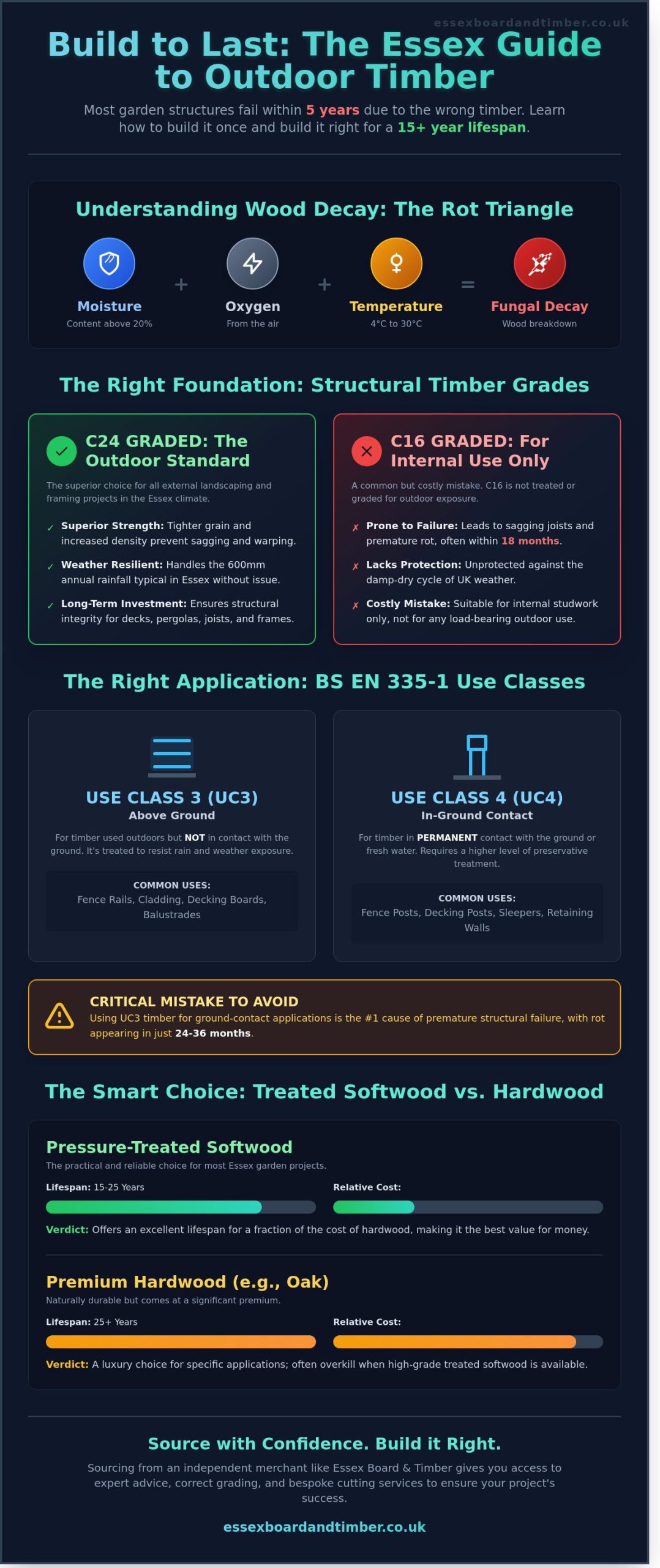
Timber used outside must be fit for purpose. At Essex Board & Timber, we prioritise C24 graded pressure-treated stock because it offers superior structural performance compared to the standard C16 found in many high-street sheds. While C16 is often sufficient for internal studwork, the tighter grain and increased density of C24 make it the reliable choice for Braintree’s external landscaping and timber framing projects. Using the wrong grade leads to sagging joists and premature rot, often within the first 18 months of installation.
The Biology of Wood Decay in the UK
Wood decay is driven by the “Rot Triangle,” which consists of moisture, oxygen, and a temperature range typically between 4°C and 30°C. If timber maintains a moisture content above 20%, fungi will thrive and consume the wood fibres. In Braintree, UV rays also play a destructive role. They break down lignin, the natural glue holding wood cells together, which results in the silver-grey colouration seen on many local fences. Additionally, customers should be mindful of tannins in certain hardwoods. These natural chemicals can leach out during heavy Essex rainfall, causing stubborn staining on light-coloured brickwork or patio slabs.
Softwood vs Hardwood: The Grounded Truth
There’s a common misconception that “hardwood” always equates to “durable.” In reality, the botanical classification relates to seed structure, not density; Balsa is a hardwood, yet it would perish instantly in a garden. For the majority of Braintree construction projects, treated softwoods are the practical choice. They’re easier to work with and significantly more cost-effective than premium hardwoods. When you weigh up the costs, a high-grade, pressure-treated softwood from Essex Board & Timber provides a 15 to 25 year lifespan for a fraction of the investment required for Oak or Iroko. This makes it the sensible option for everything from sleepers to pergola frames.
- Pressure Treatment: Essential for preventing fungal attacks in ground-contact timber.
- C24 Grading: Offers higher strength and better aesthetics for visible garden structures.
- Weather Resistance: Correctly specified timber handles the 600mm of annual rainfall typical in Essex without warping.
By understanding what timber for outdoor use uk conditions demand, you ensure your project stands up to the elements. Essex Board & Timber stocks the specific grades needed to handle the local climate, ensuring your work remains structural and safe for years to come.
Decoding Use Classes: The Secret to Long-Lasting Essex Projects
Selecting what timber for outdoor use uk projects requires more than just picking a durable species; it involves understanding the British Standard BS EN 335-1. This regulation categorises wood based on its exposure to moisture and the ground. At Essex Board & Timber, we frequently see Braintree builders making the mistake of using Use Class 3 materials where Use Class 4 is required. This technical error often leads to structural rot within 24 to 36 months, which can void project warranties and lead to costly insurance disputes. We ensure our stock meets the exact safety and longevity thresholds required for the damp UK climate, protecting your reputation and your client’s investment.
Use Class 3 (UC3): Above Ground Applications
Use Class 3 (UC3) covers timber used outdoors but kept clear of the ground. This includes shiplap cladding, fence rails, and tongue-and-groove boards. While UC3 timber is pressure-treated to resist the elements, it still requires a professional finish to prevent moisture ingress over time. Essex Board & Timber stocks a wide range of treated shiplap specifically for these applications. Without a secondary sealant or regular maintenance, even high-quality UC3 wood can succumb to the high humidity levels often found in Essex gardens. For those building load-bearing structures like raised decks, we recommend our high-quality C24 timber to ensure maximum strength and safety.
Use Class 4 (UC4): Ground Contact Essentials
Use Class 4 (UC4) is the essential standard for any timber in permanent contact with the earth or fresh water. In Braintree, the heavy clay soil retains significant moisture throughout the winter, creating a harsh environment for wood. Fence posts and garden sleepers must be UC4 to survive this constant saturation. You can identify UC4 timber at Essex Board & Timber by checking for specific treatment stamps or asking our yard team for the manufacturer’s data. This timber undergoes a more intensive high-pressure treatment process that forces preservatives deep into the sapwood. This process ensures the wood remains resistant to fungal decay and insect attack for its intended 15-year service life.
- Structural Integrity: UC4 prevents the “snap at the ground line” common in poorly specified fence posts.
- Moisture Resistance: Essential for Braintree’s clay-rich gardens that suffer from poor drainage.
- Regulatory Compliance: Meets all current UK building standards for ground-contact construction.
Essex Board & Timber remains committed to supplying only the correct grade for the job. Using the wrong class is a risk no professional should take. Our team provides the technical expertise to help you distinguish between these classes, ensuring your outdoor projects stand firm against the Essex weather for years to come.
The Best Timber Species for Braintree Outdoor Construction
At Essex Board & Timber, we maintain a vast inventory at our Braintree yard to ensure local tradespeople have immediate access to the right materials. Selecting what timber for outdoor use uk projects require involves balancing structural performance against our damp, unpredictable climate. For any project involving load-bearing structures, such as raised decks or pergolas, C24 treated timber is our primary recommendation. It offers superior strength and fewer knots than C16 alternatives, providing the stability needed for Essex builds. We focus on stocking species that withstand high moisture levels while remaining cost-effective for large-scale installations.
Pressure-Treated European Redwood and Whitewood
Redwood is the superior choice for pressure treatment because its cellular structure allows for deeper preservative penetration compared to Whitewood. At Essex Board & Timber, our kiln-dried C24 stocks are treated to Use Class 3 or 4 standards. This ensures a lifespan of 15 to 25 years when maintained with annual oils. For those working on sheltered outbuildings or internal framing, our guide to CLS timber explains why that specific grade is better suited for protected environments. Redwood’s natural stability reduces the risk of twisting, which is vital for maintaining level decking frames in Braintree gardens.
Durable Hardwoods: Oak, Iroko, and Sapele
European Oak remains the traditional standard for high-end Essex porches and gates due to its natural tannins that resist rot. For outdoor furniture, Braintree tradespeople often prefer Iroko. This African hardwood contains high oil content, making it exceptionally water-resistant and a great alternative to teak. When planning what timber for outdoor use uk weather demands, keep in mind that hardwoods will move. You should expect some natural movement and surface checking in large hardwood beams; these are characteristic features that do not compromise the structural integrity of the timber.
- European Oak: Best for traditional framing and heavy-duty gates.
- Iroko: Ideal for bespoke garden seating and tables.
- Sapele: A stable, reddish-brown hardwood often used for external joinery and window frames.
Modified Timbers: The Rise of Accoya
Accoya has changed the expectations for timber longevity in Braintree. Through a process called acetylation, the wood’s chemical structure is altered to prevent water absorption, making it virtually rot-proof. It carries a 50-year above-ground guarantee, which is significantly higher than standard softwoods. This modified timber is sourced from sustainable, fast-growing forests, offering an environmental advantage over slow-growing tropical hardwoods. While the initial investment is higher, the reduced maintenance and extreme dimensional stability make it a cost-effective choice for premium Braintree doors and cladding projects.
When upgrading your home with high-performance timber doors from a specialist like Grabex Windows Ltd, choosing the right hardware is just as vital for longevity; you can discover Door-Tech Services to find specialist replacement parts and hardware designed for durability.
Selecting Timber for Specific Braintree Garden Applications
Successful landscaping in Braintree requires more than just picking a wood that looks good. Essex Board & Timber recommends an application-first approach. This means matching the specific durability class of the wood to the physical demands of the job. Choosing the wrong specification often leads to premature failure and wasted investment. Selecting what timber for outdoor use uk conditions demand depends heavily on Braintree’s specific geography. The open landscapes around North Essex create high wind-loading on garden structures. If you ignore these lateral forces, even the best timber will fail. Local soil drainage also dictates your foundation choice. Essex clay retains water; meaning timber posts require specific treatments to avoid rot.
Fencing and Boundary Protection
Braintree gardens often face stiff winds across open fields. For these conditions, featheredge boards are superior to pre-made panels. They allow for a bespoke, stronger construction that handles wind pressure more effectively. At Essex Board & Timber, we advise using 4×4 UC4 treated posts for any fence exceeding 1.8 metres in height. UC4 signifies that the timber is treated for permanent ground contact. To extend the life of your boards, always install a 150mm gravel board. This prevents “wicking,” where the timber sucks up moisture from the damp Essex soil, causing the bottom of the fence to decay.
Decking and Raised Platforms
When deciding between timber and composite, consider the Braintree aesthetic. Traditional timber offers a classic look, but it requires a robust subframe. Safety is the priority for any elevated platform. Essex Board & Timber stocks C24 graded joists for these structural applications. C24 timber is superior to the standard C16 because it has fewer knots and a higher density, meeting strict safety compliance for load-bearing decks. Ensure your design includes a 50mm clear air gap beneath the subframe. This airflow is the most effective way to prevent the buildup of stagnant moisture that rots timber from the inside out.
Retaining Walls and Sleepers
Retaining walls must withstand significant weight from wet soil. While used railway sleepers provide a rustic charm, they often weep creosote in the sun. This makes them unsuitable for areas where children play or where you grow vegetables. New pressure-treated sleepers are the practical alternative. For maximum longevity, use incised timber. These sleepers feature thousands of small machine-made cuts that allow the preservative to penetrate deep into the core. When building your wall, follow these steps for a durable finish:
- Use 250mm timber drive screws to secure layers together.
- Install a membrane behind the sleepers to separate the wood from the soil.
- Ensure a 100mm gravel drainage layer sits at the base of the wall.
Understanding what timber for outdoor use uk weather permits will save you significant maintenance time over the next decade. Mixing materials, such as using concrete for post foundations while keeping timber for the visible sections, often provides the most durable results for local Braintree projects.
Contact the expert team at Essex Board & Timber today to order C24 structural timber for your next garden project.
Sourcing and Protecting Your Timber in Braintree
Choosing the right supplier is as vital as choosing the wood itself. Buying from an independent merchant like Essex Board & Timber ensures you get expert advice tailored to the East of England’s climate. Unlike national DIY chains, we maintain high stock levels of specialist materials and understand the local ground conditions. Our bespoke cutting service at our Braintree yard means your timber arrives ready for installation. These precision cuts reduce the risk of on-site damage and ensure every piece fits perfectly. We manage our own delivery fleet across Essex, ensuring your order is handled carefully and protected from the weather during transit.
Professional Finishing and Maintenance
Treating your wood correctly is the only way to ensure longevity. You must follow the “End-Grain Rule” without exception. This means applying a high-quality preservative to every cut made with a saw on-site. The end-grain acts like a straw, sucking up moisture and leading to rot if it’s left bare. For Braintree projects, we recommend oils with built-in UV filters to combat the 1,500 hours of sunshine the region averages annually. Plan for a maintenance re-coat every 12 to 24 months. This schedule prevents the wood from silvering and keeps the moisture barrier intact.
Selecting the Right Fixings
Standard zinc-plated screws are a mistake for outdoor projects. They corrode quickly, causing “bleeding” where black streaks ruin the timber’s appearance. Braintree tradespeople consistently opt for 304 or 316 grade stainless steel fixings to avoid this. For larger structures like pergolas or heavy decking, hot-dipped galvanised bolts offer the necessary shear strength. If you’re building a subframe using C24 graded timber, always use structural coach bolts rather than simple wood screws. This ensures the frame remains stable as the wood expands and contracts with the seasons.
Visit Essex Board & Timber in Braintree
Our yard at Bakers Lane is fully stocked and ready for your next project. Seeing the quality of our hardwood and softwood in person helps you decide what timber for outdoor use uk projects require for a professional finish. We offer competitive pricing and dedicated trade accounts for Essex contractors, providing the reliability your business needs to stay on schedule. Our team provides a final checklist for every order, ensuring you have the right fixings and preservatives before you leave the yard. Contact our Braintree team today for a quote or to discuss your specific requirements with our experienced staff.
Build for Longevity in Your Braintree Garden
Selecting the correct grade and treatment class ensures your outdoor structures withstand the British weather for 15 years or more. By focusing on C24 treated timber and understanding Use Class 3 and 4 requirements, you protect your investment against rot and fungal decay. When you’re deciding what timber for outdoor use uk standards demand, quality and local sourcing are the most reliable factors for success.
Essex Board & Timber serves as your dedicated independent Braintree merchant, providing the technical expertise and high-quality stock needed for professional results. We offer a bespoke cutting service on-site to match your specific plans, alongside reliable local delivery across Essex to keep your project moving. Our yard is stocked with pressure-treated materials designed for durability, backed by over 25 years of local industry experience.
Browse our range of C24 Treated Timber and Outdoor Supplies to find exactly what you need for your garden. We look forward to helping you get your next build underway.
Frequently Asked Questions
Is pressure-treated timber safe for raised vegetable beds in Braintree?
Pressure-treated timber supplied by Essex Board & Timber is entirely safe for building raised vegetable beds. Since 2004, UK regulations have prohibited the use of CCA (Chromated Copper Arsenate) in domestic timber treatments. We stock timber treated with modern copper-based preservatives that are approved for use around edible crops. Many Braintree gardeners choose to line their beds with a heavy-duty polythene membrane to prevent direct soil contact, which can also extend the life of the wood by another 5 years.
How long will C24 treated timber last outdoors in the UK?
When considering what timber for outdoor use uk projects require, C24 treated timber typically lasts between 15 and 20 years if it’s specified for Use Class 4 ground contact. At Essex Board & Timber, we ensure our structural carcassing meets high standards for durability and strength. If the timber is Use Class 3 and kept above the ground, such as in a deck frame, you’ll likely see a lifespan of 12 to 15 years. Regular maintenance and ensuring the wood isn’t sitting in standing water will help you reach the upper end of these estimates.
Do I need to paint or seal treated timber immediately after installation?
You shouldn’t seal or paint pressure-treated timber immediately after you’ve finished your installation. The treatment process leaves the wood saturated with liquid, and applying a finish too soon traps moisture inside, which causes the paint to peel within 3 months. Essex Board & Timber recommends waiting 6 to 12 months until the timber is fully seasoned and dry. You can check this by dropping water on the surface; if it absorbs rather than beads, the wood is ready for a specialist sealant or stain.
Can I use interior CLS timber for an outdoor shed frame in Essex?
Using untreated interior CLS for an outdoor shed frame in Essex is a mistake that leads to structural rot within 24 months. Standard CLS is designed for dry, internal stud walls and lacks the preservative protection needed to survive the 80% average humidity found in the local climate. When determining what timber for outdoor use uk builds need, always opt for the treated structural timber held in stock at Essex Board & Timber. Choosing the correct treated material ensures your shed remains solid for 15 years or more.
What is the best wood for a gate that won’t warp in Braintree weather?
For a gate that resists warping in Braintree, Iroko or European Oak are the best choices because of their high natural oil content and density. These hardwoods have a movement rate of less than 2% across varying seasons, making them incredibly stable. If you’re looking for a more cost-effective softwood option, Essex Board & Timber supplies kiln-dried Joinery Grade Redwood. When this wood is properly seasoned and finished with a high-quality oil, it provides a stable alternative that handles the local weather without twisting.
Why is my outdoor timber turning grey and can I stop it?
Outdoor timber turns grey because ultraviolet rays from the sun break down the lignin in the wood’s surface cells. This natural weathering process affects every timber species and usually becomes visible within 6 to 18 months of exposure. To stop this, you can apply a UV-resistant oil or pigmented stain available at Essex Board & Timber. These products contain UV filters that act like sunscreen for your timber, blocking the rays and maintaining the original wood colour for several years before a top-up is required.
What is the difference between green and brown pressure treatment?
The difference between green and brown pressure treatment is purely aesthetic and doesn’t change the level of rot protection. Green treatment is the standard finish at Essex Board & Timber, leaving a light olive tint that eventually weathers to a silver-grey. Brown treatment includes a added dye to give the wood a darker, cedar-like appearance from the moment it’s installed. Both options use the same high-pressure chemical process to protect against fungal decay and insect attack for up to 15 years in outdoor environments.
Can I put timber fence posts directly into concrete in Essex clay soil?
Putting timber fence posts directly into concrete in Essex clay soil isn’t recommended because clay holds water, which leads to “post rot” at the ground line. The concrete creates a bucket effect that traps moisture against the timber, often causing failure within 7 to 10 years. Essex Board & Timber recommends using 100mm of gravel at the base of the hole for drainage before adding Postcrete. For the best results, use our UC4 incised posts which are specifically manufactured to withstand ground contact for at least 15 years.
