
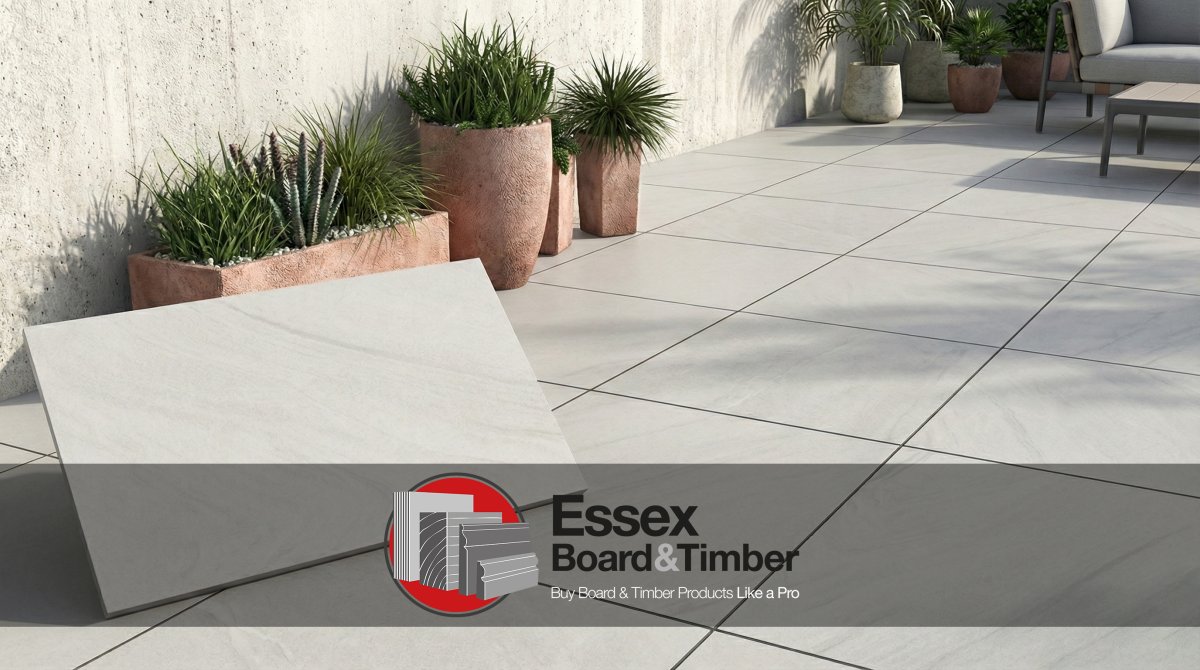
Planning a new patio for your Essex home often raises more questions than it answers. Are modern porcelain slabs genuinely a better choice than traditional stone? Will they become a slippery hazard in the British rain? And how do you even begin to select the right size and thickness for your garden? It’s easy to get bogged down in technical details and conflicting advice, leaving your project stalled before it even starts.
As your local Braintree-based supplier, we believe in providing clear, practical guidance. This complete guide is designed to cut through the noise. We’ll break down exactly why porcelain paving is becoming the go-to choice for homeowners across Essex, covering everything from its exceptional weather resistance and low-maintenance benefits to selecting the perfect style and finish. By the end, you’ll have the confidence and knowledge to plan your project and choose the right materials for a garden you can be proud of.
Key Takeaways
- Understand why porcelain’s exceptional durability and weather resistance make it a sound investment for any Essex garden.
- Learn how to assess technical specifications like slip ratings and thickness to choose the perfect slabs for your patio’s specific needs.
- Discover the essential steps for preparing a solid sub-base, ensuring your new patio stands the test of time.
- Gain a clear understanding of what makes modern porcelain slabs a superior, low-maintenance alternative to traditional stone or concrete paving.
What Are Porcelain Slabs? The Modern Alternative to Traditional Paving
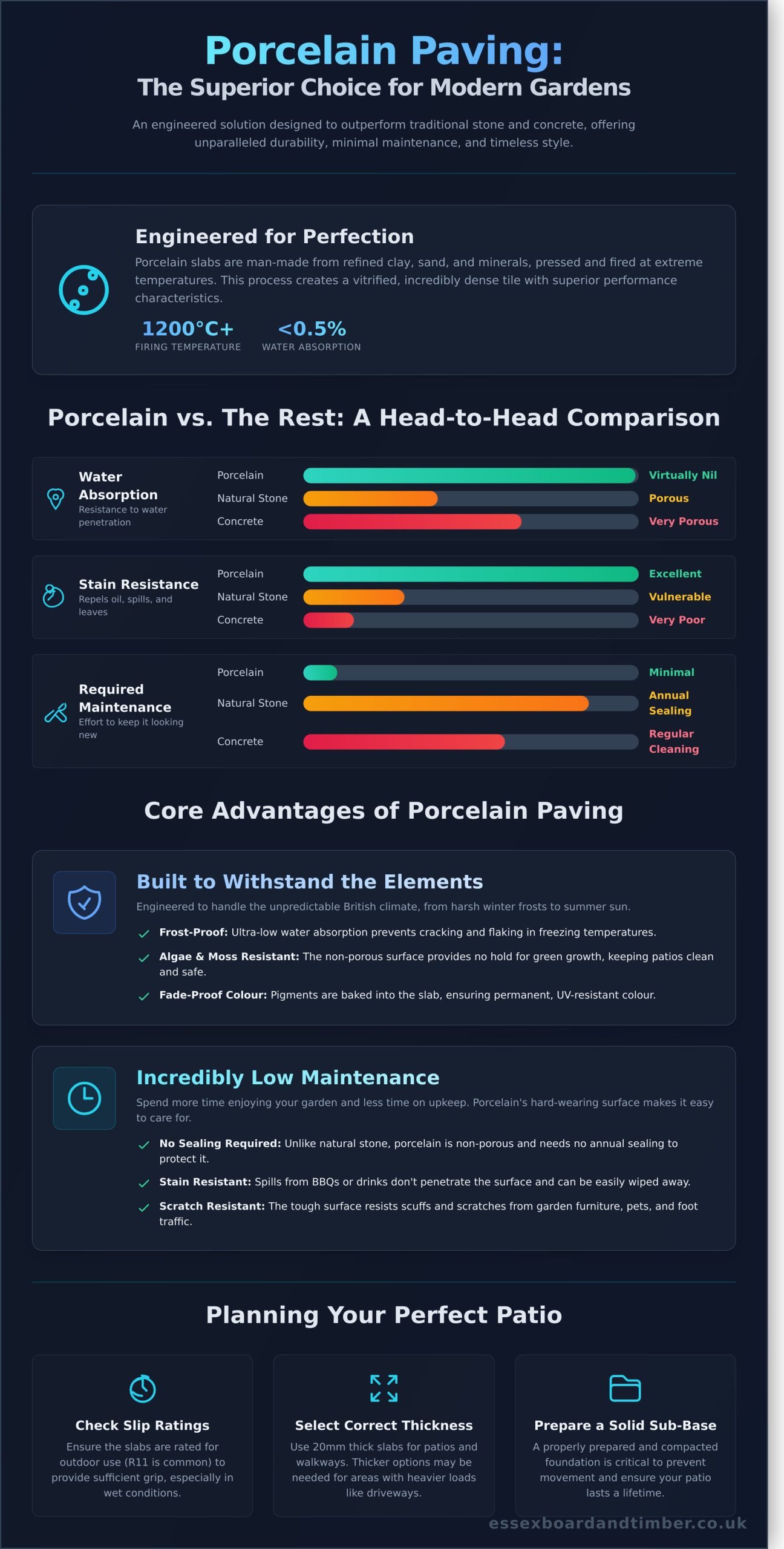
When planning a new patio or pathway for your Braintree garden, understanding the material options is crucial. While traditional choices are common, modern advancements offer superior performance. Porcelain paving is a type of man-made vitrified ceramic, engineered for exceptional strength and durability. A precise mixture of refined clay, sand, and other natural minerals is pressed and then fired in a kiln at temperatures exceeding 1200°C. This process, detailed in resources explaining what porcelain tile is, creates an incredibly dense and hard-wearing slab with a very low water absorption rate.
This manufacturing method sets porcelain slabs apart from traditional materials like natural stone and concrete. The key differences lie in three critical areas for any outdoor surface:
- Water Absorption: Porcelain absorbs less than 0.5% water, making it frost-proof and highly resistant to algae and moss.
- Stain Resistance: Its non-porous surface repels common garden stains from oil, fallen leaves, and spillages.
- Colour Consistency: As an engineered product, every slab is uniform in colour and pattern, ensuring a clean and consistent finish.
Porcelain vs. Natural Stone (e.g., Sandstone, Slate)
While natural stone offers rustic charm, it demands considerable upkeep. Porcelain’s technical properties provide a more practical solution for modern living. Its near-zero water absorption means no seasonal sealing is required to prevent frost damage or green algae growth, a common issue with porous sandstone. Furthermore, where natural stone has inherent variations from slab to slab, porcelain provides a reliable, uniform appearance perfect for contemporary garden designs.
Porcelain vs. Concrete Paving Slabs
Concrete paving is a functional choice, but it falls short on long-term performance and aesthetics. Porcelain is exceptionally resistant to staining, whereas porous concrete will quickly absorb spills and encourage moss growth. Over time, UV exposure can cause the pigments in concrete to fade significantly. The colour in high-quality porcelain paving is permanent and fade-proof. You also gain access to a far wider range of premium, high-definition finishes that convincingly replicate natural materials without their inherent drawbacks.
Key Benefits: Why Choose Porcelain Paving for Your Braintree Garden?
When investing in a new patio or garden path, you need a material that offers both lasting performance and visual appeal. For homeowners in Braintree and across Essex, porcelain paving is an outstanding choice that delivers on all fronts. It’s a modern, engineered solution designed to outperform traditional materials, making it a sound long-term investment for your property.
The key advantages lie in its exceptional durability and minimal upkeep, freeing up your time to simply enjoy your garden rather than constantly maintaining it. Here’s a practical breakdown of why so many are choosing porcelain slabs for their outdoor spaces.
Built to Withstand the Essex Weather
The unpredictable British climate demands a robust paving solution. Porcelain is manufactured at extreme temperatures, resulting in a dense, non-porous slab that is perfectly suited to the weather in our region. Key benefits include:
- Excellent Frost Resistance: With an extremely low water absorption rate (typically below 0.5%), water cannot penetrate the slab. This prevents the cracking and flaking that can affect porous stone during harsh Braintree winter frosts.
- Algae and Moss Resistant: The non-porous surface gives algae and moss nowhere to take hold, meaning your patio stays cleaner and less slippery during damp periods.
- Fade-Proof Colour: The pigments are baked into the slab during manufacturing, ensuring the colour won’t fade under the summer sun. Your patio will look as good in ten years as it does on day one.
Incredibly Low Maintenance
For busy households, the low-maintenance nature of porcelain is a major advantage. Unlike natural stone or timber decking, porcelain requires very little effort to keep it looking its best. The hard-wearing, sealed surface means you can spend less time on upkeep and more time relaxing.
To fully embrace that newfound peace in your garden sanctuary, many people turn to natural wellness aids. If you’re exploring ways to support your well-being with botanical products, you can check out Mental Compass.
- No Sealing Required: Forget the annual cost and effort of sealing. Porcelain paving is non-porous and ready to go from the moment it’s laid.
- Stain Resistant: Spilt wine from a BBQ or oil from a lantern? The non-absorbent surface prevents stains from penetrating, allowing for a simple wipe-clean or jet wash.
- Scratch Resistant: The tough surface is highly resistant to scratches and scuffs from garden furniture, pets, or high foot traffic.
Unmatched Style and Versatility
Functionality doesn’t mean compromising on style. Modern manufacturing techniques allow porcelain slabs to be produced in a vast array of colours, textures, and finishes. This versatility ensures there is a perfect option for any Braintree property, from a contemporary new build to a period cottage.
You can achieve the authentic look of natural stone, the warmth of timber, or the clean lines of polished concrete, all with the superior performance of porcelain. This makes it easy to create a seamless flow from your kitchen or living area directly into the garden, extending your living space outdoors.
Choosing the Right Porcelain Slabs: A Braintree Buyer’s Guide
Selecting the right materials is the most critical step in any successful patio project. With so many options available, it’s easy to feel overwhelmed. This straightforward guide cuts through the noise, providing the essential technical knowledge and design advice you need to choose the perfect porcelain slabs for your Braintree garden. Getting these details right from the start ensures a durable, safe, and visually stunning finish that will last for years.
Understanding Thickness and Slip Rating
When choosing slabs for outdoor use in the UK, thickness is non-negotiable. The industry standard is 20mm. This provides the necessary strength and durability to withstand British weather, garden furniture, and regular foot traffic. Anything less is designed for internal use and will likely crack under pressure. Equally important is the slip rating, or ‘R-Rating’. For patios and walkways, always look for an R11 slip rating. This ensures a high level of grip, even when the surface is wet, making your garden safer for the whole family. Many of our slabs also feature rectified edges, meaning they are machine-cut for perfect consistency, allowing for crisp, narrow grout lines and a clean, modern look.
Selecting Size, Colour, and Finish
The right slab can transform the feel of your outdoor space. A great tip for smaller Braintree gardens is to use large format slabs; their minimal grout lines create an illusion of a larger, more uncluttered area. Colour choice is also key:
- Light Tones: Creams, light greys, and beiges are excellent for brightening up shady spots and creating a sense of openness.
- Dark Tones: Charcoals, slates, and deep greys provide a dramatic, contemporary backdrop for planting and furniture.
Finally, consider the finish. A textured or riven surface not only mimics the look of natural stone but also adds an extra layer of slip resistance, combining aesthetic appeal with practical function.
Planning and Measuring Your Project
Accurate planning prevents costly mistakes. To calculate the area you need to cover, simply multiply the length of the space by its width to get your total in square metres (m²). Once you have this figure, always add 10% extra to your order. This vital contingency covers any cuts, wastage, or accidental breakages during installation. Remember, the porcelain slabs are just one component; you’ll also need to source materials for a solid sub-base, such as MOT Type 1 aggregate and sharp sand, as well as a suitable jointing compound or grout. As your local Braintree merchant, we can advise on the exact quantities needed for your specific project.
Preparing for Installation: Foundations for a Lasting Braintree Patio
A premium patio is only as good as the foundation it sits on. While the visual appeal of porcelain slabs is the end goal, proper ground preparation is the single most important factor in ensuring your Braintree patio remains stable, level, and trouble-free for decades. Cutting corners here will inevitably lead to problems later on.
For the experienced DIYer or professional landscaper, the process is straightforward but requires attention to detail, especially given the challenging ground conditions often found in Essex.
The Importance of a Solid Sub-Base
A properly compacted MOT Type 1 sub-base is non-negotiable. This layer of crushed aggregate provides a solid, load-bearing platform that prevents sinking and movement. In areas with heavy clay soil like Braintree, it’s also vital for drainage. A well-constructed sub-base allows water to drain away, preventing it from pooling and causing issues like frost heave in winter. Crucially, each slab must be laid on a full, continuous mortar bed. The ‘dot and dab’ method creates voids, leading to water ingress, loose slabs, and cracked grout over time.
Essential Tools and Materials
Having the right equipment and materials to hand will ensure a professional and efficient installation. Key items include:
- Diamond Blade: Porcelain is extremely hard. A quality diamond blade for an angle grinder or table saw is essential for clean, precise cuts.
- Rubber Mallet: For gently tapping slabs into the mortar bed to achieve the correct level without causing damage.
- Spirit Level: A long spirit level is vital for ensuring every slab is perfectly level and that you maintain a slight, consistent fall for water run-off.
- Slab Primer: Due to their low porosity, porcelain slabs require a slurry primer to be painted on the back to ensure they bond securely with the mortar bed.
- Brush-In Grout: Modern brush-in jointing compounds offer a fast, durable, and permeable finish that resists weeds and frost damage.
Coordinating with Other Garden Projects
If your new patio is part of a larger garden transformation, planning is key. The footings for other structures like pergolas, gazebos, or raised decking should be installed during the ground preparation stage to avoid disturbing your finished patio later. For any load-bearing garden structures, a strong timber frame is essential. We stock the high-strength C24 graded timber needed for durable garden construction that stands the test of time. If you’re considering elevated outdoor living areas alongside your patio, our guide to composite decking in Braintree explains how to create slip-resistant, low-maintenance raised platforms that complement your porcelain paving perfectly.
Source Your Porcelain Slabs Locally from Essex Board & Timber
Once you have decided on the benefits of a porcelain patio, the final and most critical step is sourcing your materials. While online retailers and national chains offer vast selections, nothing replaces the value and assurance of working with a trusted, independent local merchant. At Essex Board & Timber, we provide more than just products; we offer the reliability, practical advice, and quality service that your Braintree garden project deserves.
Why Buy Local in Braintree?
Choosing a local supplier in Essex eliminates the guesswork and potential hassle associated with buying online. When you work with us, you get tangible benefits that ensure your project runs smoothly from start to finish.
- See the True Product: Computer screens can never accurately represent the true colour, finish, and texture of paving. By visiting our yard, you can see and feel our porcelain slabs in person, guaranteeing the product you choose is precisely what you envision for your space.
- Get Practical, Expert Advice: Our team has years of experience supplying materials for local landscaping projects. We provide no-nonsense, practical guidance on everything from sub-base preparation to the correct grout, ensuring you have the right materials for a professional result.
- Avoid Online Uncertainty: Forget the risk of damaged deliveries, incorrect orders, and non-existent customer service. As an established Braintree business, we stand behind our products and are here to help if you have any questions.
Our Range and Services
We are committed to making your project as straightforward as possible. We stock a curated range of high-quality 20mm outdoor porcelain paving, selected for its superior durability, anti-slip properties, and timeless style. We are a one-stop shop for your entire patio installation, supplying everything you need under one roof.
Our comprehensive service includes:
- A hand-picked selection of premium porcelain paving.
- All the necessary sub-base aggregates, primers, and specialist grouts.
- A reliable and efficient delivery service across Braintree and the surrounding Essex area.
The best way to start your project is to see the materials firsthand. Visit our Braintree yard to see our range and get expert advice from a team that knows landscaping inside and out.
Your Braintree Project: Source Quality Porcelain Paving Locally
As this guide has shown, porcelain paving is the superior choice for a modern Braintree patio, offering unmatched durability, minimal maintenance, and timeless style. By selecting the correct slab and ensuring a solid foundation, you are investing in a garden feature that will perform flawlessly and add significant value to your property for decades.
Understanding how high-quality landscaping translates into market value is a key consideration for any homeowner. For more insights on property enhancement and the real estate market, you can visit Noble Real Estate.
As an established, independent Braintree-based timber and builders merchant, Essex Board & Timber is the trusted local supplier for your project. We provide expert, practical advice to both trade and DIY customers, ensuring you get the right materials for the job. Our high-quality porcelain slabs are backed by a reliable local delivery service that covers Essex, making your project logistics simple and efficient.
Ready to transform your garden? Contact our Braintree team for a quote on porcelain slabs today. Let’s build an outdoor space you can be proud of.
Frequently Asked Questions About Porcelain Slabs
Is porcelain paving more expensive than natural stone in the UK?
Initially, the cost per square metre for porcelain can be higher than some budget-friendly natural stones like Indian Sandstone. However, it is often comparable to or more affordable than premium options like granite or slate. The real value is in the long-term cost. Porcelain requires no sealing and is exceptionally resistant to staining and weathering, which means you save significantly on maintenance products and labour over the patio’s lifespan. It’s a sound investment for a durable, low-hassle garden.
How do you cut porcelain slabs cleanly?
Porcelain is an extremely dense and hard material, so a standard tile scribe is not suitable. For a professional, clean cut, you must use a wet-cutting bench saw equipped with a high-quality, continuous rim diamond blade designed specifically for porcelain. This method cools the blade, prevents chipping, and minimises dust. Always mark your line clearly and guide the slab through the blade with slow, steady pressure for the best possible finish.
Can I lay porcelain slabs directly onto soil or grass?
No, you cannot. Laying porcelain slabs directly onto an unprepared surface like soil or grass will lead to a failed installation. The ground will shift, causing the slabs to become uneven, unstable, and likely to crack. A solid, correctly prepared sub-base is essential for longevity. This involves excavating the area, installing a compacted layer of MOT Type 1 aggregate, and then laying the slabs on a full mortar bed. Proper groundworks are non-negotiable.
How do I clean and maintain my porcelain patio?
Maintenance is one of porcelain’s greatest strengths. Its non-porous surface resists moss, algae, and staining, so it requires very little upkeep. For general cleaning, a simple sweep to remove debris followed by a wash with warm water and a pH-neutral cleaner is all that’s needed. For more stubborn dirt, a pressure washer on a medium setting can be used safely. Unlike many natural stones, porcelain paving never needs to be sealed.
Are porcelain slabs slippery when wet?
All reputable outdoor porcelain paving sold in the UK is manufactured with a textured, anti-slip surface to ensure safety. You should always check for the product’s ‘R’ rating – an R11 slip rating is the industry standard for external use and provides excellent grip, even in wet British weather. This makes porcelain a very safe and practical choice for patios, garden paths, and areas around hot tubs or swimming pools where surfaces are frequently wet.
What is the best sub-base for porcelain slabs on Essex clay soil?
Given the heavy clay soil common across Essex, which expands when wet and shrinks when dry, a robust sub-base is critical for stability. We recommend a deeper-than-standard sub-base of at least 150mm of compacted MOT Type 1 aggregate. This creates a solid, free-draining foundation that isolates the patio from the clay’s movement. This, combined with a permeable membrane and a full wet mortar bed, provides the necessary strength for a long-lasting installation in our local conditions.
