
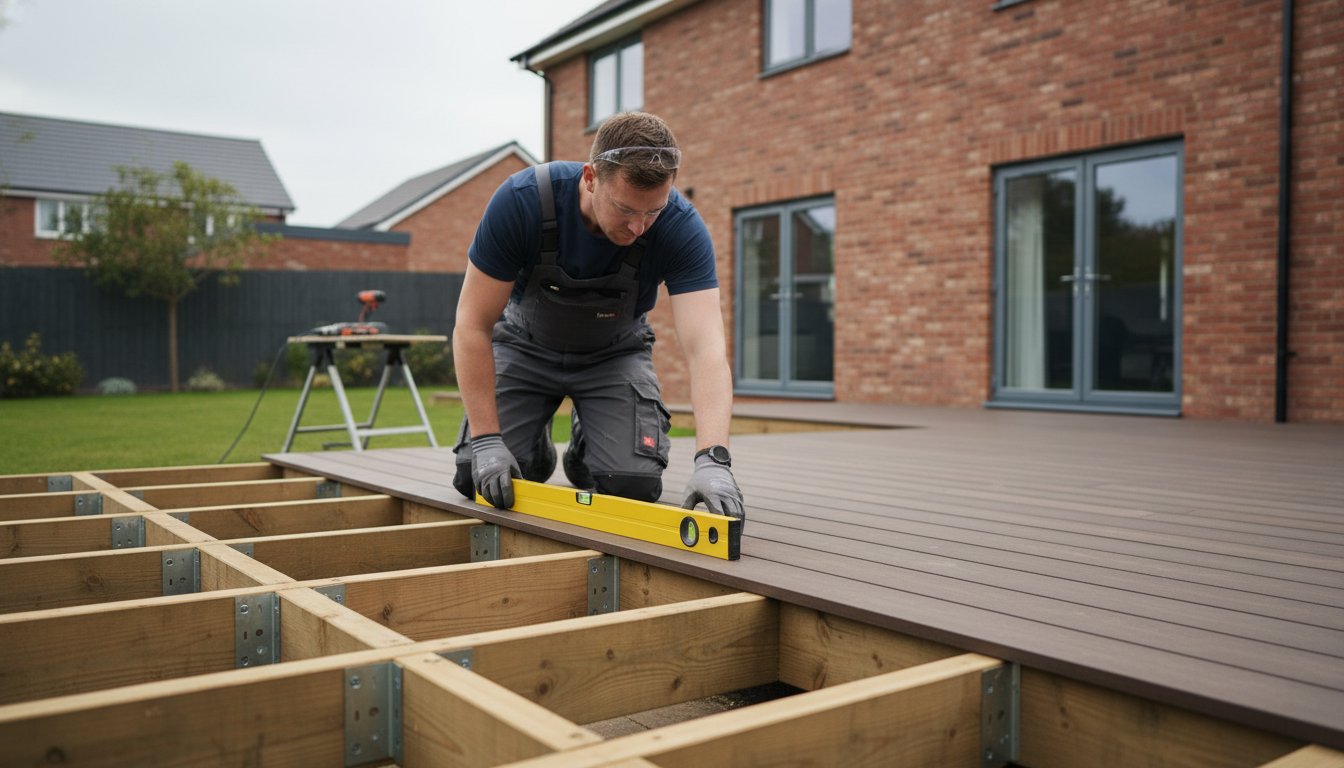
A deck that feels solid today might be rotting from the joists up within three years if you overlook the fundamentals of drainage and timber grade. At Essex Board & Timber, we’ve seen many projects fail prematurely because the wrong materials were specified for the unpredictable local climate. You likely want a structure that remains level and sturdy for decades, rather than one that starts to bounce or decay after a single wet Braintree winter. By focusing on avoiding common decking mistakes, you can protect your investment and ensure your outdoor space remains safe and functional for the long term.
This guide will show you exactly how to select trade-grade materials, such as C24 carcassing and UC4 treated timber, to prevent structural failure. We’ll examine the technical errors that lead to poor drainage and explain why specific joist spacing is critical for a “bounce-free” finish. We’re providing a practical builder’s checklist covering everything from subframe construction to the final fixings, giving you the confidence to build with the same precision as the trade professionals who visit our yard daily.
Key Takeaways
- Learn why the substructure is the most critical part of your build and how correct joist spacing prevents ‘bouncy’ or sagging boards.
- Understand the vital difference between C16 and C24 timber, and why UC4 treatment is essential for any wood in contact with the ground.
- Discover the technical secrets to avoiding common decking mistakes, such as choosing the wrong fixings or neglecting necessary expansion gaps.
- Master the 1:100 fall technique to ensure proper drainage and protect your timber against Braintree’s seasonal temperature shifts.
- Streamline your project with our professional pre-build checklist and find out how opening an Essex Board & Timber trade account secures competitive pricing.
Substructure Failures: Why Your Decking Frame Is the Most Critical Part
The frame is the most critical element of any outdoor project. While homeowners often focus on the aesthetic of the top boards, frame failure remains the primary reason for premature deck replacement in Essex. At Essex Board & Timber, we’ve observed that substructures built without proper planning often fail within 8 years, despite the surface looking perfectly fine. Avoiding common decking mistakes starts with understanding that the ‘invisible’ foundation carries the entire load. In Braintree, the high clay content in the soil retains significant moisture, making ground preparation and timber selection vital for a long-lasting installation. If the frame rots or shifts, the entire investment is lost.
Calculating Correct Joist Spans and Centres
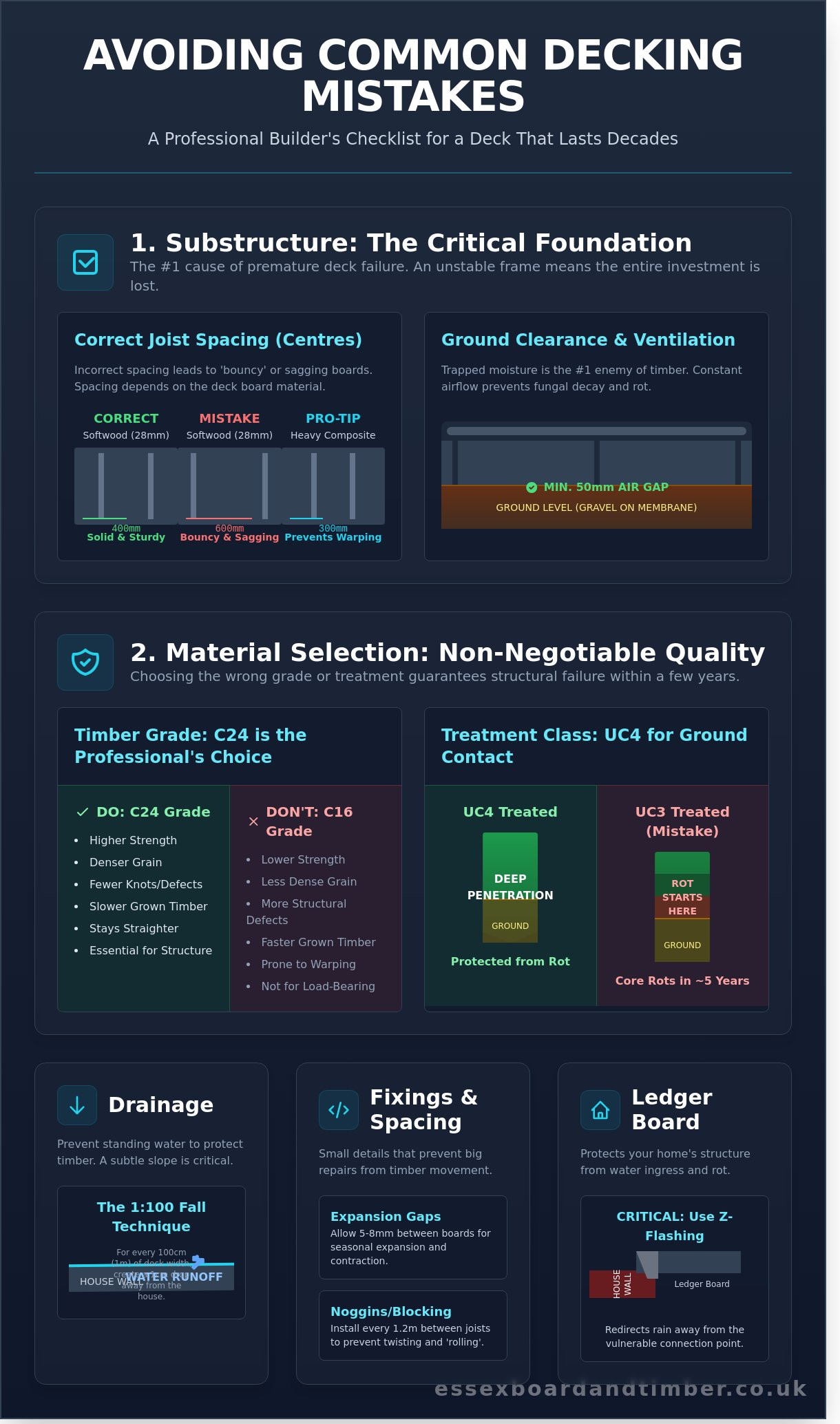
Standard practice usually dictates 400mm centres for 28mm thick softwood boards. If you increase this to 600mm, you’ll likely experience ‘bouncy’ boards or permanent sagging under foot. For heavier composite materials, 300mm centres are often necessary to prevent warping. Using high-quality C24 timber from our yard ensures the structural strength required for these spans. It’s also vital to install noggins and blocking every 1.2 metres. This prevents the joists from twisting or ‘rolling’ as the timber seasons over its first two years in the garden.
Managing Ground Clearance and Ventilation
Ledger Board Security and Flashing
Attaching a deck directly to your property requires precision and the right hardware. Many DIYers make the error of ‘bolting and hoping’ without considering water ingress. You must use Z-flashing to redirect rain away from the house rim joist. Without this barrier, water sits against the brickwork and rots the timber from the inside out. Following established deck construction principles, we stock specific structural bolts at our Braintree site designed for secure masonry attachment. Avoiding common decking mistakes in this area protects the structural integrity of your home, not just the deck itself.
Material Selection Blunders: Why C24 Treated Timber Is Non-Negotiable
C24 timber is the industry standard for strength and fewer knots in structural applications. Choosing the wrong grade of wood is one of the most frequent hurdles when avoiding common decking mistakes. While C16 timber is widely available, it’s often grown in faster climates, resulting in a less dense grain and more defects. For a structural frame in Braintree, where damp soil and varying weather conditions are the norm, C16 simply doesn’t offer the same long-term security as its superior counterpart.
The Superiority of C24 Graded Timber
UC4 Treatment vs Standard Pressure Treating
A common pitfall is assuming all “pressure treated” wood is equal. Most national DIY chains stock timber treated to Use Class 3 (UC3), which is only suitable for components that aren’t in contact with the ground. Any post or joist sitting on or in the earth must be treated to Use Class 4 (UC4). Without this deeper preservative penetration, timber suffers from internal rot. The exterior might look green and healthy, but the core will turn to mush within 5 years. Essex Board & Timber sources correctly treated UC4 materials specifically designed to withstand the moisture levels found in local garden environments.
Composite vs Timber: Choosing for the Right Environment
Composite decking is a popular choice for Braintree homeowners seeking low maintenance, but it isn’t a “set and forget” solution for every site. A common misconception is that composite boards can be installed on a cheap, low-grade timber frame. In reality, the frame is the most likely point of failure. If you’re investing in premium composite surfaces, you must pair them with a high-quality C24 timber or aluminium subframe. While timber offers a traditional aesthetic and lower initial cost, composite excels in shaded, north-facing gardens where algae growth is a constant battle.
While composite is excellent for outdoor longevity, those looking for similarly durable and easy-to-clean solutions for their home’s interior might consider high-quality vinyl flooring; to understand the benefits of these modern materials, read more.
Before you start your build, it’s worth checking our current stock levels at Essex Board & Timber to ensure you have the right structural components for the job. Our team can help you distinguish between a “bargain” and a material that will actually last the distance.
Fixing and Spacing Errors: Small Mistakes That Lead to Big Repairs
Braintree gardens face significant weather shifts, from humid summers to damp, freezing winters. Standard zinc-plated wood screws are not designed for these conditions. They will often fail and corrode within 24 months because they react poorly with the chemicals used in pressure-treated timber. This leads to “bleeding” stains on your wood and, eventually, total structural failure. Avoiding common decking mistakes starts with understanding that timber is a living material. It holds hidden moisture even when it feels dry to the touch. If you install boards too tightly, they will “cup” or “pop” as they expand during the wet Essex winters. Over-driving screws is another frequent error. Forcing a screw head too deep crushes the timber fibres, creating a small pocket where water sits and accelerates rot from the inside out.
Selecting Professional Grade Fixings
Essex Board & Timber recommends using only stainless steel or high-quality coated screws for any outdoor project. These fixings are specifically engineered to resist the corrosive nature of treated softwood. When building your subframe with C24 timber, apply joist tape to the top of every beam. This creates a waterproof seal that prevents water ingress through the screw holes. Always follow the 2.5x rule for screw length. If you are using a standard 28mm deck board, you need a screw of at least 65mm to ensure a secure, long-term grip into the joist below.
Mastering Board Spacing and Alignment
Consistency is the difference between a professional build and a DIY disaster. You must maintain a 5mm gap between every board. This rule is vital for drainage and allows the timber to expand without buckling. Essex Board & Timber supplies dedicated spacers that ensure this gap remains uniform across the entire surface. Don’t align all your board joins in a single row. Staggering the joins increases the overall structural strength of the deck and creates a much more appealing aesthetic. This approach prevents the “hinge” effect where a deck can feel bouncy or unstable underfoot.
Pre-drilling and Countersinking Techniques
Precision matters when you reach the ends of your boards. You should never drive a screw within 50mm of the end of a board without pre-drilling a pilot hole. Skipping this step almost guarantees the timber will split, which ruins the board and compromises the fixing. Use a countersink tool from the Essex Board & Timber stock range to ensure every screw head sits perfectly flush with the surface. Finally, remember that every time you cut a piece of timber, you expose the untreated core. Seal every single cut end with a high-quality end-grain preservative during the installation process to lock out moisture and prevent decay.
Local Climate Considerations: Protecting Your Essex Decking
Braintree’s weather patterns place unique demands on outdoor timber installations. With seasonal temperature shifts typically ranging from average winter lows of 1°C to summer highs reaching 23°C, wood movement is a constant factor. If you don’t account for this, your deck will eventually buckle, cup, or split. Avoiding common decking mistakes starts with acknowledging that timber is a natural, breathing material that reacts heavily to the Essex environment. Proper planning ensures your investment survives the local humidity and frost cycles without losing its structural integrity.
Designing for Drainage and Slope
The Critical Importance of End-Grain Sealer
Every time you cross-cut a board, you expose the internal vascular system of the wood. These exposed ends act like a bundle of straws, drawing moisture deep into the heart of the timber where it can’t easily evaporate. This is where internal rot usually begins. Applying end-grain preservative to every cut is the single most effective way to prevent rot. Essex Board & Timber supplies a range of specialist sealants and adhesives designed to block these pathways. Skipping this step is one of the most frequent errors we see in local DIY projects, yet it’s vital for a long-lasting installation.
Seasonal Maintenance for Longevity
The north-facing deck is a common problem in Essex gardens. These areas receive significantly less sunlight, meaning they stay damp for longer and become breeding grounds for moss and slippery algae. Annual cleaning in late spring is essential to keep these surfaces safe for use. Don’t be tempted to use a pressure washer on its highest setting. This aggressive force destroys the timber’s surface fibres, leaving the wood more porous and vulnerable to the elements. Inspect your frame for signs of structural stress after a cold winter, as frost can expand small cracks into major splits that compromise safety.
The Ultimate Pre-Build Checklist for Essex Board & Timber Customers
Success in any garden construction project depends on meticulous preparation. By verifying your requirements before the first joist is laid, you’re avoiding common decking mistakes that often lead to costly delays and mid-build frustration. At Essex Board & Timber, we’ve seen many projects stall because of a simple miscalculation in material quantities. We recommend performing a final audit of your plans to ensure every linear metre of timber is accounted for before work begins.
Opening a trade account at our Braintree yard is a practical step for anyone managing a larger installation. It provides access to competitive project pricing and helps you maintain a healthy budget. To further streamline your workflow, you should take advantage of our bespoke cutting service. We can machine timber to your exact specifications on-site, which saves significant labour time and reduces the volume of waste you’ll need to clear from the property. Reliability is the cornerstone of our service, and we’re here to ensure your materials arrive exactly when the ground is ready.
Your Essential Shopping List
A robust deck requires more than just surface boards. Your foundation should consist of high-quality C24 treated joists for superior structural integrity. Don’t forget the essential fixings and hidden components that ensure longevity. Our Braintree shop stocks everything from joist hangers and heavy-duty structural fixings to weed membranes and end-grain preservative. Using the right tools is just as vital, so we supply professional-grade equipment from Ox and Spear & Jackson to help you achieve a precise finish.
Why Braintree Trades Choose Essex Board & Timber
Local contractors rely on us because we understand the specific demands of the Essex construction landscape. As an independent merchant, we maintain high stock levels that national retailers often struggle to match. Logistics are simplified through our dedicated timber and sheet materials delivery in Essex, ensuring your timber stays in prime condition from our yard to your site. You’re not just buying wood; you’re gaining the support of a team with deep technical knowledge of carcassing and softwood machining.
Next Steps: Starting Your Project
The best way to kick off your build is to get a comprehensive quote for your full material list. You can visit our Braintree site to inspect the quality of our timber firsthand and speak with our staff about your specific requirements. If you’re planning internal stud work alongside your garden project, it’s worth consulting our guide to CLS timber for expert advice on material selection. Stop by the shop today or call our team to ensure you have everything needed for a professional, long-lasting deck.
Build a Deck That Stands the Test of Time
Don’t leave your project to chance with inferior supplies from national retailers. As an independent local merchant, Essex Board & Timber provides the expert advice and high stock levels required for any scale of construction. We maintain large volumes of C24 treated timber and offer a bespoke cutting service on-site to save you time and ensure precision with every length. Visit Essex Board & Timber in Braintree for your professional decking materials and get your build moving today. We’re here to help you get the job done right.
Frequently Asked Questions
Is C16 or C24 better for decking joists in Braintree?
C24 timber is the superior choice for decking joists because it offers higher structural strength and fewer knots than C16. While C16 is often sufficient for small, ground-level decks, Essex Board & Timber recommends C24 for any elevated platforms or projects where you need longer spans between supports. Choosing C24 grade timber is a reliable way of avoiding common decking mistakes that lead to a bouncy or unstable walking surface.
How much gap should I leave between decking boards?
You should leave a gap of 5mm to 8mm between your decking boards to account for the natural movement of the wood. Timber expands and contracts as the moisture levels change in the Essex climate, and these gaps prevent the boards from buckling against each other. Proper spacing also allows for vital airflow and drainage, which protects the subframe from damp. Essex Board & Timber stocks various spacers to help you achieve a professional, consistent finish.
Do I really need to use stainless steel screws for my deck?
You must use stainless steel or high-quality coated screws to prevent corrosion and the black tannin staining that ruins the look of a deck. Standard fixings will often rust within 12 to 18 months when exposed to the elements or the chemicals found in pressure-treated timber. Essex Board & Timber supplies 304 and 316 grade stainless steel screws that are designed to last the full lifespan of your timber, ensuring the structure remains safe and secure.
Can I build a deck directly on the grass in my Essex garden?
You can’t build a deck directly on grass because the trapped moisture will cause the timber to rot within 2 years. A deck requires a clear 100mm to 150mm gap between the ground and the joists to allow for air circulation. Essex Board & Timber recommends using concrete pads or adjustable pedestals on a weed-membrane base to support your frame. This keeps the carcassing timber dry and prevents the structural failure that occurs when wood sits in damp soil.
What is the best way to stop decking from being slippery in winter?
Should I oil my new deck immediately after installation?
You shouldn’t oil new pressure-treated decking immediately because the timber needs time to weather and shed excess treatment chemicals. Most experts at Essex Board & Timber suggest waiting 3 to 6 months before applying any oils or stains to ensure the product can penetrate the wood fibres properly. If you apply a finish too early, it will likely peel or flake off within a few weeks because the wood is still too “green” to absorb it.
How often should I inspect my decking frame for rot?
You should inspect your decking frame for rot at least once a year, preferably in early autumn. Focus your inspection on the ledger board where it meets the house and any joists that are in permanent shade or close to the ground. If you can push a screwdriver into the wood by more than 5mm, it’s a sign that the timber is failing. Essex Board & Timber can provide replacement treated joists and structural fixings if you identify any weak spots during your annual check.
