
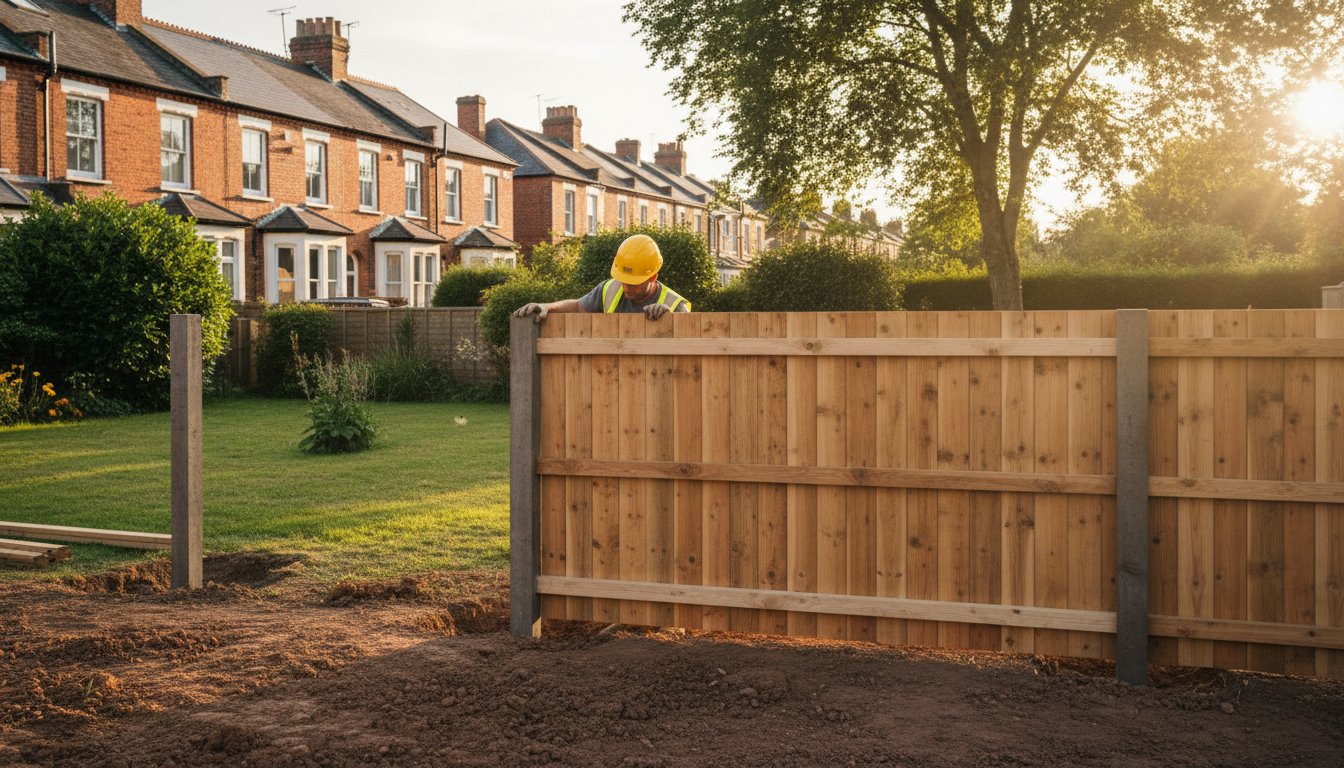
Last January, many homeowners in Braintree watched their garden boundaries collapse during the 80mph gusts of Storm Henk. It’s frustrating to invest time and money into a project only to see it lean after the first heavy rain or buckle in the wind. At Essex Board & Timber, we know that digging into heavy Essex clay is a physical challenge that requires a specific approach and high-quality materials to ensure longevity. This guide explains exactly how to build a garden fence in Essex that stands firm against the local weather and soil conditions.
You’re likely looking for a professional-looking, sturdy boundary that won’t require constant maintenance. We’ll help you master the essentials of planning, sourcing, and installing a durable fence tailored to our region’s unique demands. This article provides a clear understanding of the materials required and the confidence to execute the project correctly. We’ll cover everything from navigating local planning rules to securing posts in stubborn clay and selecting the professional-grade timber needed for a trade-standard finish.
Key Takeaways
- Learn the essential legalities of boundary ownership and neighbourly etiquette to ensure your fencing project begins on a solid foundation.
- Understand why selecting trade-grade materials from Essex Board & Timber is vital for creating a fence that withstands the local climate and prevents premature rot.
- Master the professional step-by-step process of how to build a garden fence essex homeowners can rely on, from clearing the line to achieving a perfectly straight run.
- Identify how to avoid common regional pitfalls, such as the ‘sail effect’ in high winds and the risks of shallow post holes in shifting clay soil.
- Discover the benefits of sourcing your timber from a local, independent merchant in Braintree that offers expert technical advice and reliable delivery.
Essential Planning and Legalities for Essex Garden Fencing
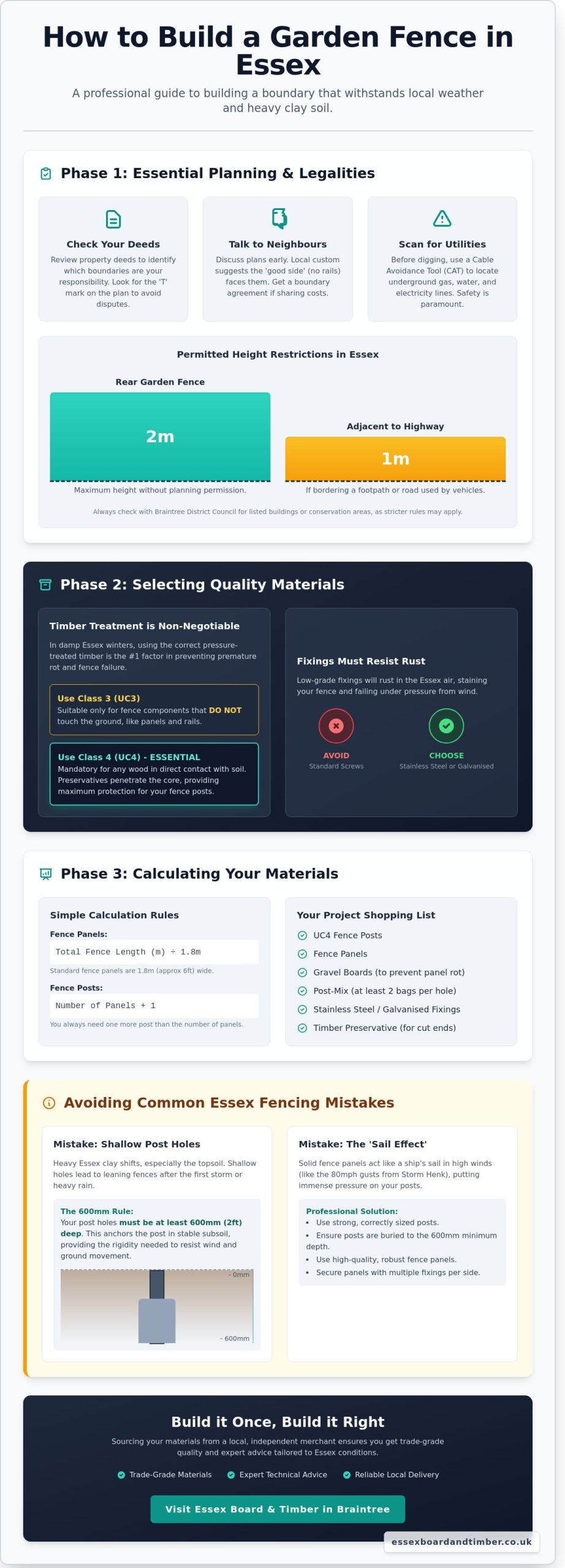
Preparation is the most critical stage of any landscaping project. Before you visit the Essex Board & Timber yard to collect your materials, you must establish exactly where your property boundaries lie. Learning how to build a garden fence essex homeowners can rely on starts with a thorough review of your property deeds. These documents identify which boundaries are your responsibility, often indicated by a ‘T’ mark on the plan. Removing an old structure only to find it belonged to a neighbour can lead to costly legal disputes and strained relationships.
Communication with your neighbours is just as vital as the technical build. While there is no strict law regarding which way the fence faces, local custom in Essex usually dictates that the ‘good side’ (the side without the rails) should face your neighbour. Discussing your plans early allows you to agree on the style and height. If you are researching different types of fencing, consider how the choice impacts the aesthetic of both gardens. Essex Board & Timber always suggests a formal boundary agreement if you plan to share the costs of the installation.
Safety must be your priority before any ground is broken. Underground utility lines for gas, water, and electricity are often buried shallower than expected. Striking a main line is dangerous and carries heavy repair costs. Use a cable avoidance tool (CAT) to scan the area where you intend to dig your post holes. Once the area is cleared, you can safely proceed with your project knowing the site is secure.
Understanding Boundary Rules and Height Restrictions
In the Braintree district and across Essex, general permitted development rights allow for rear garden fences up to 2 metres in height. If your fence is adjacent to a highway or footpath used by vehicles, the maximum height is restricted to 1 metre without planning permission. Essex Board & Timber recommends checking with Braintree District Council if your property is a listed building or located within a conservation area, as stricter rules apply. Exceeding these limits without approval can result in an enforcement notice to remove the structure.
Calculating Materials for Your Braintree Project
Accuracy in your measurements prevents multiple trips to the trade counter. Standard fence panels are 1.8 metres wide, so divide your total run length by 1.8 to determine the number of panels required. Remember that you will always need one more post than the number of panels. For example, a 10-panel run requires 11 posts. Your shopping list at Essex Board & Timber should include gravel boards to protect the base of your panels from rot, and at least two bags of post-mix per hole. If you require heavy-duty structural components, we also stock C24 timber for bespoke framing requirements. Don’t forget to account for stainless steel fixings and a high-quality timber preservative to ensure longevity. When calculating how to build a garden fence essex weather won’t degrade, always factor in the depth of the posts, which should be buried at least 600mm into the ground.
Selecting High-Quality Timber and Materials for Durability
The success of your project depends on the quality of the materials you source. Essex winters are notoriously damp; moisture often sits against the wood for months, which accelerates rot in inferior products. Understanding how to build a garden fence essex residents can rely on for decades requires a move away from the thin, mass-produced panels found in national DIY chains. At Essex Board & Timber, we supply trade-grade materials designed to withstand the specific coastal and rural conditions found across the county.
You must pay close attention to the ‘Use Class’ of the timber. Standard timber is often treated to Use Class 3 (UC3), which is suitable for components that don’t touch the ground. However, any wood in direct contact with soil must be treated to Use Class 4 (UC4). This deeper pressure treatment ensures the preservatives penetrate the heartwood, providing a necessary barrier against fungal decay and insect attack. Using the wrong class of timber is the most common reason for fence failure within the first five years.
Fixings are another area where quality cannot be compromised. We recommend using stainless steel or high-quality galvanised screws and nails. Low-grade fixings will rust quickly in the Essex air, leaving unsightly black streaks down your timber and eventually snapping under the pressure of high winds. Using 50mm or 75mm screws ensures a secure grip that won’t pull through the wood during a storm.
The Importance of C24 Treated Timber for Fencing
For the structural framework of your fence, particularly the rails and heavy-duty posts, we recommend using C24 treated timber. While C16 is the standard for many basic builds, C24 is a superior grade that has been kiln-dried and strength-graded. It has fewer knots and a tighter grain, which means it’s less likely to twist or warp as the seasons change. Because it’s a denser material, it holds fixings more securely and provides the structural integrity needed for taller or more exposed boundary lines. This is the professional choice for those who want a straight, level finish that lasts.
Choosing Between Timber and Concrete Posts
Deciding between timber and concrete posts is a balance of aesthetics and longevity. Timber posts offer a seamless, natural look that many homeowners prefer, but they require proper drainage and UC4 treatment to survive in the ground. Concrete posts are virtually indestructible and won’t rot, making them a practical choice for areas with heavy clay soil common in parts of Essex. If you opt for timber panels, always use concrete gravel boards at the base. These prevent the wood from sitting in standing water, significantly extending the lifespan of the fence. Before you begin digging your post holes, it’s a good idea to check the planning permission rules for fences to ensure your chosen height is within legal limits.
If you aren’t sure which materials best suit your specific ground conditions, our team at the trade counter can help. You can view our full range of fencing supplies online or visit us in person to see the quality of our stock.
Step-by-Step: How to Build Your Garden Fence
Professional results depend on the quality of the groundwork. Knowing how to build a garden fence essex residents can rely on starts with clearing the entire fence line of debris, vegetation, and any old concrete footings that might obstruct your new run. A clean site prevents delays once you start the physical installation. Once the ground is clear, set out a high-visibility string line between two fixed points. This guide is essential to ensure a perfectly straight run across your property boundary. Essex Board & Timber recommends using 50mm x 50mm timber pegs to secure your line, keeping it taut and clear of the ground.
Dig the first post hole to a minimum depth of 600mm. This depth is vital for stability, providing the necessary leverage against high winds. We suggest installing panels and posts sequentially rather than setting all posts at once. This method involves fixing a post, then the gravel board and panel, before moving to the next hole. It ensures a tight, professional fit and accounts for any slight variations in panel width. Essex Board & Timber stocks a wide range of high-quality panels and posts ready for immediate site delivery across the region.
Setting Posts in Heavy Essex Clay Soil
Essex is known for its heavy, compacted clay soil. This ground can be unforgiving, so traditional spades often fail to get the job done efficiently. Use a heavy-duty post-hole digger or a ‘shuv-it’ to create narrow, vertical holes without disturbing the surrounding earth. Before placing the post, add a 50mm layer of hardcore or scalpings at the base of the hole. This layer provides essential drainage, preventing the timber from sitting in stagnant water and rotting. For a vertical, immovable finish, use Post-Crete. Pour the water into the hole first, then add the powder mix. Hold the post steady for roughly five to ten minutes until it sets. Always slope the surface of the concrete away from the timber to shed rainwater effectively.
Securing Gravel Boards and Fence Panels
Longevity is built into the details. Always fix a gravel board to the base of your posts before installing the main panels. These sacrificial boards prevent ground moisture from wicking into the panel timber, which is the most common cause of premature fence failure. Use stainless steel or galvanised screws to attach your panels to the timber posts. These materials won’t rust or cause unsightly streaks on the wood as they age. Check for level and plumb at every single stage of the installation. A small error at the start of a run can lead to a significant lean by the end of the garden. Essex Board & Timber provides all the necessary fixings and ironmongery to ensure your project remains sturdy and professional for years to come.
Avoiding Common Fencing Mistakes in the Essex Climate
Essex weather conditions present specific challenges for any outdoor timber project. High winds from the Thames Estuary and the heavy clay soil found across much of the county require a robust approach to installation. At Essex Board & Timber, we often see fencing projects fail prematurely because the builder didn’t account for these local environmental factors. Understanding the physics of wind and the chemistry of soil is vital if you want your fence to last more than a few seasons.
A frequent error is ignoring the ‘sail effect’ on exposed sites. A solid fence panel acts exactly like a sail in a gale, catching the wind and transferring massive amounts of kinetic energy directly to the posts. In coastal or open areas of Essex, this pressure can snap a standard 75mm post at the ground line during a single autumn storm. To counter this, Essex Board & Timber recommends using larger 100mm posts or switching to semi-porous panel designs that allow air to pass through.
The ground itself is another hurdle. Essex is famous for its London Clay, which expands when wet and shrinks during dry spells. If post holes are shallow, this movement will eventually heave the post out of the ground or cause it to lean. You must dig your holes to a minimum depth of 600mm for a standard 1.8m fence to ensure the post is anchored in stable subsoil. Skipping this step is the most common reason for a wobbly finish when learning how to build a garden fence essex homeowners can be proud of.
Dealing with Wind Loading and Exposure
If your garden is particularly breezy, avoid solid lap panels. Instead, choose hit-and-miss or slatted panels. These designs feature gaps that break up the wind speed, significantly reducing the load on your posts. Essex Board & Timber stocks various slatted options that provide privacy without the structural risk of a solid barrier. Ensure you use heavy-duty galvanised fixings; standard staples often pull through the wood when the panel vibrates in high winds. Increasing the thickness of your rails and using three rails instead of two on a 1.8m fence adds the necessary rigidity to withstand 60mph gusts.
Preventing Ground Rot with Correct Installation
Timber failure usually happens at the point where the post meets the earth. A common mistake is encasing the bottom of the post entirely in concrete, creating a ‘bucket’ that holds water against the wood. Always leave a few inches of gravel at the base of the hole for drainage. Applying a bitu-mastic coating to the bottom 600mm of the post before it goes into the ground provides a secondary moisture barrier. Essex Board & Timber advises regular maintenance checks every 12 months to clear away soil or leaf litter that has built up against the base of the fence, as this trapped debris accelerates rot. When you plan how to build a garden fence essex professionals will tell you that moisture management is the key to longevity.
For uneven or sloping gardens, don’t try to follow the ground contour with the top of the fence. This looks untidy and amateur. Instead, step the panels. Use different heights of gravel boards to fill the gaps at the bottom while keeping the top line of the panels perfectly level. This method maintains a consistent aesthetic and ensures the structural integrity of the run.
Ready to start your project? Speak to the experts at Essex Board & Timber for advice on the best materials for your local conditions.
Why Source Your Fencing Supplies from Essex Board & Timber
Building a durable boundary requires more than just a basic understanding of carpentry; it demands high-grade materials that can withstand the unpredictable East Anglian weather. Essex Board & Timber serves as a central hub for Braintree and the wider county, providing the structural integrity required for long-lasting boundaries. When you are researching how to build a garden fence essex, the quality of your timber is the most critical factor in ensuring the finished product doesn’t warp or rot within a few seasons. We stock an extensive range of pressure-treated softwood, hardwood, and sheet materials designed for maximum durability.
Our position as an independent merchant allows us to focus on quality over mass-market turnover. We understand the specific soil conditions and wind loads common in the Essex countryside, meaning we can recommend the right post depths and timber grades for your specific location. This local expertise is invaluable for both professional contractors who need reliable supplies and DIY enthusiasts who require technical guidance before they begin their project.
Trade-Quality Stock and Reliable Service
We maintain high stock levels of C24 timber, which offers superior strength and fewer knots compared to the standard C16 alternatives often found in national DIY chains. Our Braintree yard houses everything from heavy-duty lap panels to close-board fencing, concrete posts, and essential galvanised fixings. The Essex Board & Timber team provides practical advice on material selection, ensuring you don’t overspend on specifications you don’t need while avoiding under-specified materials that might fail.
Our bespoke cutting service is a significant advantage for gardens with non-standard dimensions. We can machine timber to your exact specifications on-site, which eliminates the need for difficult manual adjustments during installation. This precision saves time and reduces waste, making the process of how to build a garden fence essex much more efficient for everyone involved. We treat every order with the same level of professional care, whether it is a single replacement panel or a large-scale trade contract for a new housing development.
Local Delivery Across Braintree and Essex
Logistical efficiency is vital for any construction project. Essex Board & Timber operates a dedicated delivery fleet that services Braintree and the surrounding Essex towns, ensuring your materials arrive on-site or at your home exactly when you need them. You won’t have to visit multiple shops to find the right tools, aggregates, or timber because we provide a comprehensive one-stop solution. This reliability helps you maintain your project timeline and avoid the frustration of missing components mid-build.
Our trade counter is staffed by experts who understand the industry inside out. We pride ourselves on offering competitive, transparent pricing that reflects the true value of professional-grade materials. You can visit our Braintree yard or contact us for a quote to discuss your requirements. By choosing a local, independent supplier, you are guaranteed a level of service and product quality that helps your garden fence stand the test of time.
Start Your Essex Fencing Project Today
Constructing a boundary that stands the test of time requires a blend of proper planning and high-specification materials. It’s essential to account for local ground conditions and the specific wind loads common in our part of the country. By choosing pressure-treated timber and avoiding common installation errors like shallow post depths, you’ll ensure your investment remains secure for the long term. Mastering how to build a garden fence essex homeowners can rely on starts with sourcing the right components from a supplier that understands the trade.
Essex Board & Timber is a leading independent local merchant with a huge on-site stock of C24 and treated timber ready for immediate collection or delivery. Our Braintree-based team has decades of industry experience and we’re always ready to help you calculate exactly what you need for your project. We pride ourselves on providing a straightforward service that skips the gimmicks and focuses on quality. Whether you’re a professional contractor or a seasoned DIYer, we’ve got the stock and the expertise to support your build from start to finish.
Get a quote for your fencing materials at Essex Board & Timber
Good luck with your build; we look forward to seeing you at our trade counter soon.
Frequently Asked Questions
Do I need planning permission for a 2-metre fence in Essex?
You don’t usually need planning permission for a fence that’s up to 2 metres high, provided it’s not next to a highway or a footpath. If the fence borders a road used by vehicles, the height limit is typically restricted to 1 metre. Essex Board & Timber recommends checking with your local planning office, such as Chelmsford City Council or Colchester Borough Council, as rules can vary in conservation areas or for listed buildings. Getting this right before you start prevents costly enforcement actions later.
How deep should I dig fence posts in heavy clay soil?
You should dig your fence post holes to a minimum depth of 600mm to ensure stability in the heavy clay soil found across much of Essex. This depth represents one-third of a standard 1.8-metre post’s height, which is necessary to resist wind leverage. Clay soil expands and contracts significantly with seasonal moisture changes, so a shallow hole will lead to leaning posts within 12 months. Essex Board & Timber stocks heavy-duty post hole diggers that make reaching this 600mm target much easier in tough ground.
Is it better to use concrete or timber posts for a garden fence?
Concrete posts are the superior choice for longevity because they’re completely rot-proof and won’t degrade in wet soil. They provide a permanent solution that can last decades, which is why many trade professionals at Essex Board & Timber prefer them for local housing projects. Timber posts offer a more traditional look and are easier to install without heavy lifting equipment. If you choose wood, ensure you use UC4 kiln-dried timber to get the best possible lifespan from your installation.
How many bags of Post-Crete do I need per fence post?
You’ll need 1.5 to 2 bags of Post-Crete for every standard 100mm square fence post you install. A hole that’s 250mm wide and 600mm deep requires this volume of material to create a secure, immovable base. Essex Board & Timber maintains large stocks of rapid-set post mix because using less than 1.5 bags often results in a weak foundation. For larger corner posts or gate posts, you should increase this to 3 bags to handle the additional weight and tension.
Can I build a fence on a sloping garden in Braintree?
You can build a fence on a sloping garden by using the stepping method, which keeps each panel level while following the gradient of the land. This technique involves installing posts at different heights and allows you to learn how to build a garden fence essex homeowners find both functional and attractive. Essex Board & Timber supplies extra-long posts specifically for these projects, ensuring you have enough timber below ground even when the panel is raised at one end. This approach avoids the awkward gaps often seen with poorly planned sloping fences.
What is the best type of wood for a long-lasting garden fence?
Pressure-treated European Redwood is the best all-round wood for a durable fence because it offers excellent resistance to fungal decay and insect attack. This timber is treated with preservatives under high pressure, forcing the chemicals deep into the wood fibres for long-term protection. Essex Board & Timber sources high-quality, sustainably harvested softwoods that are ideal for the British climate. While Western Red Cedar is a premium alternative with natural rot resistance, treated Redwood remains the most cost-effective and reliable choice for most Essex gardens.
Do I need to treat my fence panels if they are already pressure-treated?
You don’t need to treat your panels immediately after installation, but applying a high-quality UV-resistant oil or stain after 12 months will extend their life. Pressure treatment protects against rot, but it doesn’t stop the wood from drying out or turning grey under the sun. Essex Board & Timber stocks a range of professional treatments that help maintain the timber’s moisture balance and colour. Applying a fresh coat every two years will keep the wood supple and prevent the structural cracking that often occurs in untreated timber.
